Madeleine Albright on the Iron Curtain
She was born Marie Jana Korbel on May 15, 1937 in the CzechRepubilc and became American politician and diplomat. She is the first woman to have become the United States Secretary of State on January 23, 1997.
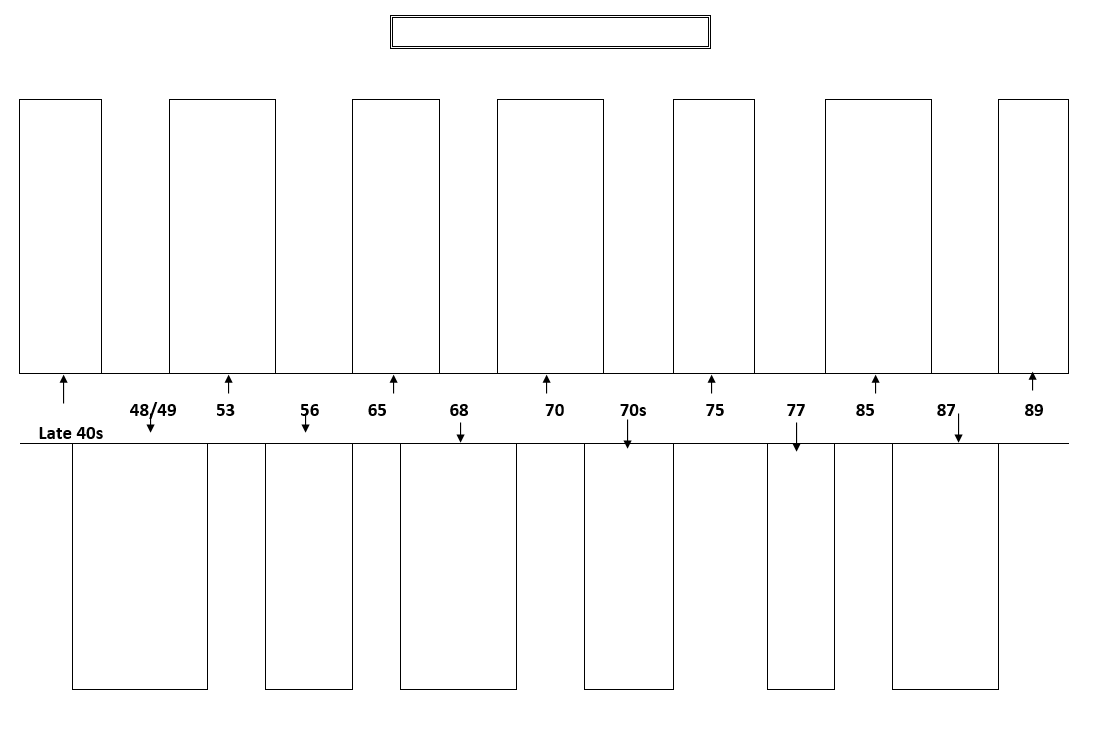
(A) The Iron Curtain had come upon Central and East Europe in the late 1940s. In most places the voices of protest were stifled and, to the West, unheard; but once or twice a decade a wind arose that caused the Curtain to part just long enough to keep up hope that freedom would one day be restored.
(B) In 1948, Tito broke with Stalin.
In 1953, there were riots in East Germany leading to the German Unification Day.
In 1956 first the Poles, then the Hungarians tried to rebel.
In 1968, it was the Czechoslovaks‘ turn.
(C)In the late 1970s, Polish dockworkers launched the Solidarity movement.
Then there was Nicolae Ceausescu in Romania, whose rule began in 1965 and lasted almost a quarter century. At the beginning he was a breath of fresh air, challenging the Soviets and proposing reforms, before he turned into a destructive tornado.
(D) The cement holding the Soviet empire together had been stressed, but it didn’t crack until 1985, when Mikhail Gorbachev became General Secretary of the Soviet Communist Party. Gorbachev designed a program of economic restructuring (perestroika), combined with a new social and intellectual approach (glasnost) that challenged the opinions upon which the Soviet System had been built. He made clear that the satellite states no longer had to take orders from Moscow. Suddenly the emperor was more liberal than his princes. The aging, backward-looking leaders of the satellites were shown as inept hacks; the change in Soviet attitudes supported changes throughout East Europe. Dissident movements bloomed and thrived.
(E) The Hungarians made economic and political reforms, developing their unique brand of „goulash Communism.“
In Poland authorities were pressured into giving Solidarity a second life.
East German officials thought they had everything under control until Gorbachev, here to help celebrate their regime’s forty-second anniversary, warned that without change there would be massive popular resistance.
(F) Relatively little attention was paid to Czechoslovakia, and I understood the reasons for that. The Soviet invasion of 1968 had broken the spirit of many. People turned inward and spent as little time as possible at their jobs. Instead they put their energy into building weekend-homes in the country-side, or chatas, to which they disappeared as early on Fridays as they could. But the seeds of Prague Spring, not altogether destroyed, began slowly to push back above ground.
(G) Oddly, American rock music provided one source of support. A group called the Plastic People of the Universe, named after a Frank Zappa song, was formed one month after the Soviet invasion. Its concerts attracted such large crowds that the authorities prohibited the group from playing in public. Planning in secret, the band continued to play, until its members were arrested and charged with disturbing the peace and playing music with an „antisocialist and antisocial impact.“ The group’s trial was viewed as a key test by intellectual dissidents. Shortly after its conviction, on January 1, 1977, more than 250 writers, professors, and human rights activists signed a manifesto—Charter 77— calling upon the Czechoslovak government to respect the civil and political rights embodied in the Helsinki Final Act, which Soviet bloc members had signed sixteen months before. One of the leaders of Charter 77 was Vaclav Havel, who was arrested several times and spent more than four years in jail.
(H) Religion also played a role. Even to young people raised as atheists, defrocked Catholic clerics became heroes. The priests, forced to take menial jobs such as cleaning latrines, held secret church services. But until 1989, these and other moments of rebellion seemed no match for the crushing weight of the Communist state.
(J) I was naturally curious about events in my native land, and in 1986 used the chance to visit as part of a U.S. Information Agency educational program